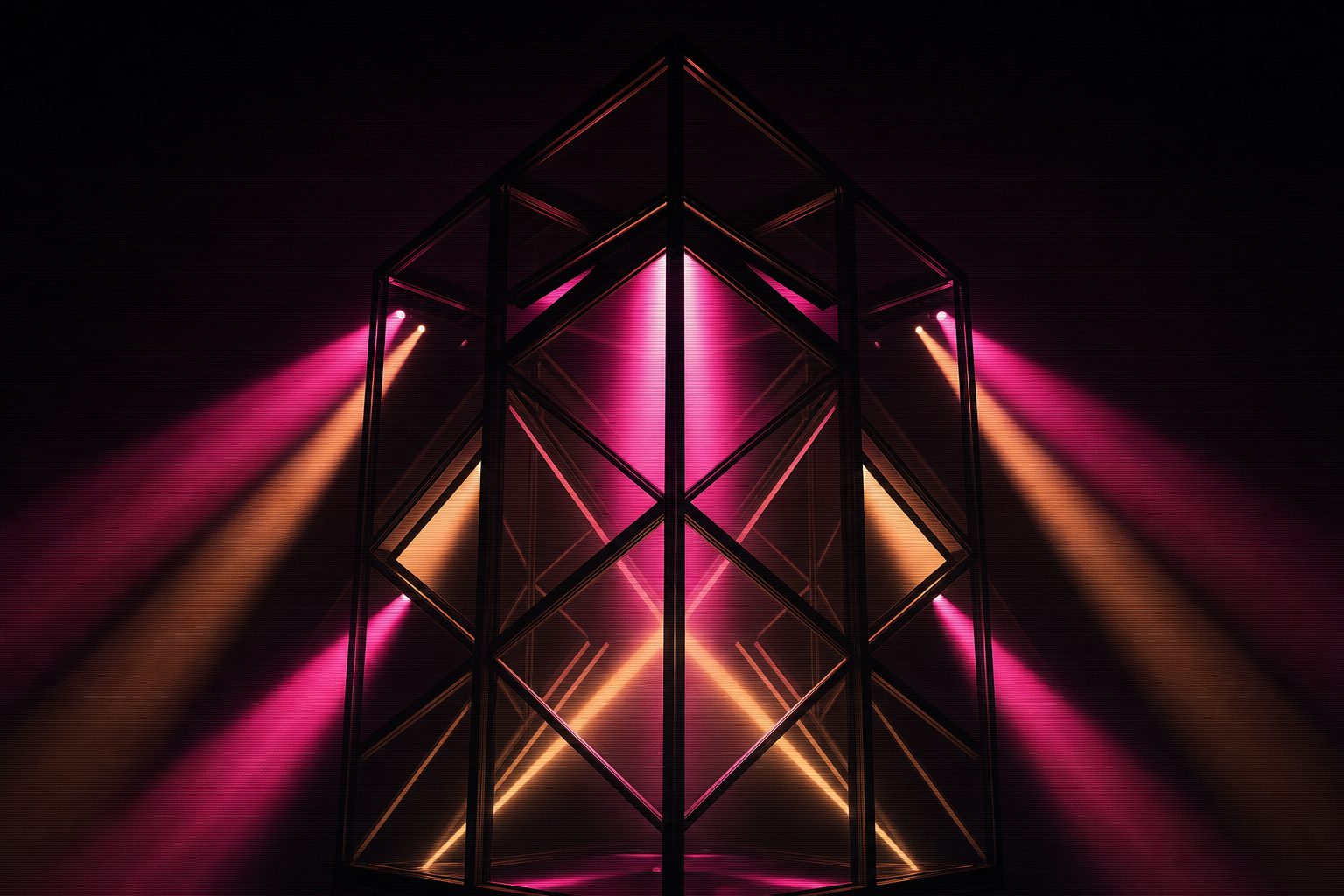
THE PRODUCTIONS
Prophecy Tour: a live performance installation as a single object
- YEAR
- 2017
- FOR
- Tchami
- DISCIPLINE
- Installation · Lighting
A performance installation is a set that behaves like an object rather than a background. It is designed to be looked at directly, which changes what the performer is standing in.
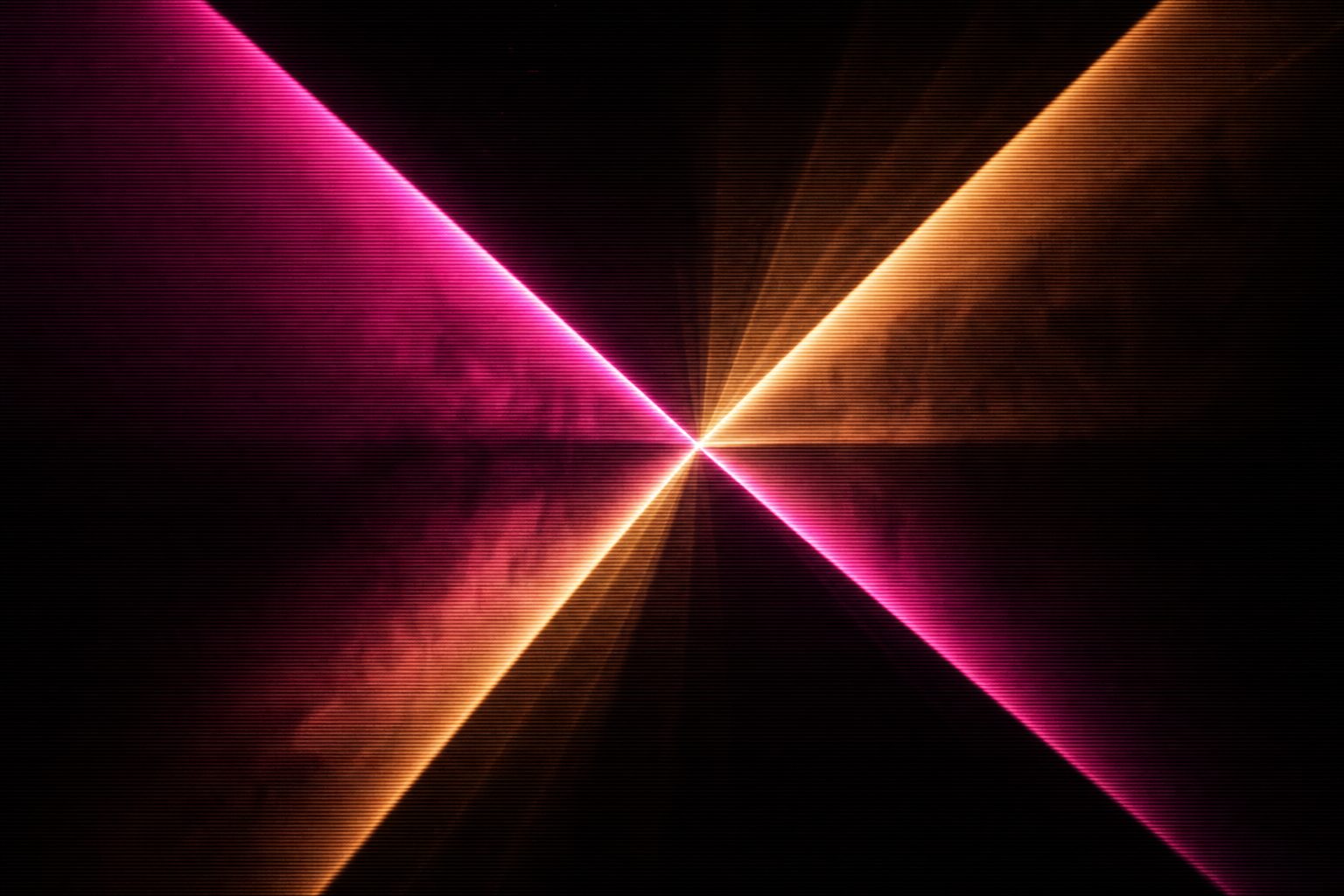
The Prophecy Tour design belongs to a category that sits slightly outside normal touring practice: the performance installation. The distinction is not scale but intent. A conventional set exists to frame a performer. An installation exists in its own right, and the performer occupies it.
An object rather than a background
The test is simple: does the design hold attention with nothing happening in front of it? A backdrop does not need to. An installation does, and that raises the standard on every element, because there is nothing to hide behind.
It also changes the performer’s relationship to the picture. Rather than standing in front of a screen, they are inside a structure, at a specific position within a composition, closer to the logic of the stacked-plane designs than to a conventional touring video rig.
Hard geometry, and why it wins
Installations of this era converge on angular frame construction, and there are three unrelated reasons that all point the same way. Straight edges and defined angles read through haze at distance where soft form dissolves. Repeated identical modules assemble the same way every night by a crew working in the dark. And angular structures pack flat.
The aesthetic is therefore partly a shipping decision, which is true of a great deal of touring design once you look at it closely.
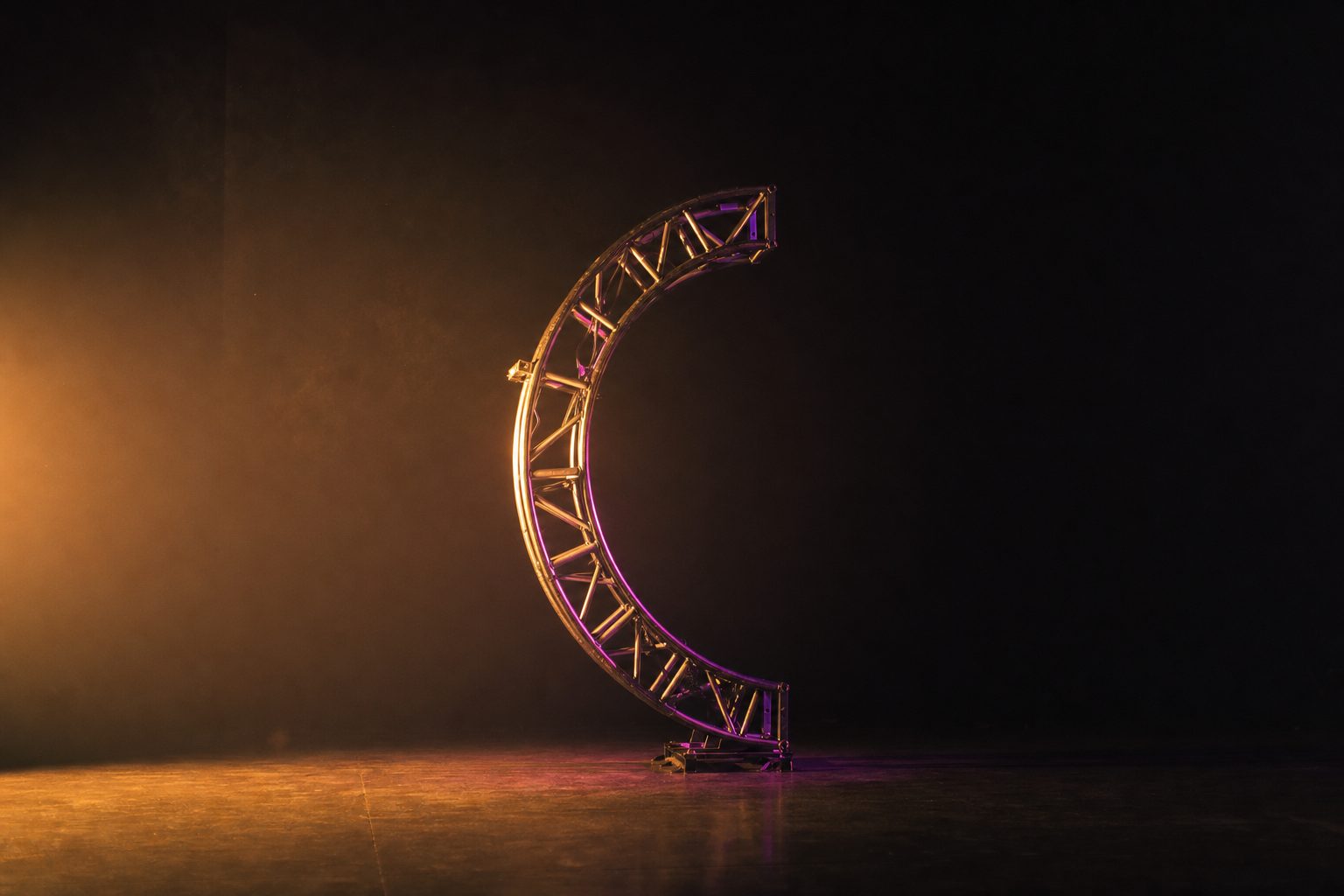
Treated as an object rather than a background, the piece has to read from every seat rather than from the camera position. That rules out a great deal: anything that depends on being seen square-on, anything with a front, anything whose composition collapses at forty-five degrees.
What survives is hard geometry. Straight edges and flat planes are easy to align, easy to recover after a truck, and legible from the side, which is why installations of this kind tend to look architectural rather than organic, and why that look is a touring decision as much as an aesthetic one.
The cost: it does not scale down
A conventional rig reduces gracefully, drop a truss, lose some fixtures, run the smaller version. An installation is a proportioned object, and removing a third of it produces something that is not the design.
The practical consequence is that a show like this either fits the venues on the routing or the routing changes. That is a commercial constraint expressed as a design one, and it is why stage architecture has to be in the room from the first conversation.
Where the technique went next
The same instinct without the touring constraint is the single-venue release show, and the same instinct taken to a closed form is the mapped cube. The version that scales to arenas by giving up the object entirely is the arena runs.
Why hard geometry survives a routing is covered under projection mapping, with the recovery routine under the dedicated mapping stage. What an object costs to fly and pack is under stage architecture.
How this page is sourced
What is recorded: the design intent, the arrangement, the technical problem it set out to answer, and the consequences for touring. What is not recorded: fixture counts, equipment models, lumen figures or content specifications, which appear in trade coverage inconsistently and are not reproduced where a single source cannot be identified.
Contemporaneous reporting is collected under the field in print, publisher and date attached to each item. The rigging and atmospheric terms used above, truss and haze among them, are defined in the glossary. How the page is written, and why an unsourced figure is left out rather than estimated, is set out on about this site.
A note on scale: an installation approach is frequently described as expensive, and the cost is not where people expect. The object itself is often modest. What it costs is schedule, the build has to be finished early enough to be mapped, and the map has to be recoverable nightly by a crew that did not build it.
Questions
the things people ask about thisWhat is a performance installation?
A stage design conceived as a single object with its own presence, rather than as a backdrop plus lighting. On a performance installation the structure is a participant: it is lit, it is composed with, and it is often the thing the audience is actually looking at.
How does that differ from a normal touring set?
A conventional set frames a performer and holds screens. An installation is designed to be interesting when nothing is happening in front of it, which raises the standard considerably, because it has to hold attention on its own.
What does an installation approach cost on tour?
Rigidity. An angular frame that is the show cannot be reduced for a smaller room without becoming a different design. Conventional rigs scale down by removing elements; installations mostly do not, so touring design of this kind either fits the routing or forces the routing.
Why do installations tend toward hard geometry?
Because it reads. Straight edges, defined angles and repeated modules survive haze, distance and motion in a way that soft or organic form does not, and hard geometry also happens to be what packs into a truck and assembles the same way every night.