THE TOOLCHAIN
MadMapper: dedicated mapping, warping and beam alignment
- ROLE
- Mapping & alignment
- TYPICAL USE
- Complex surfaces
- RUNS
- Show machine
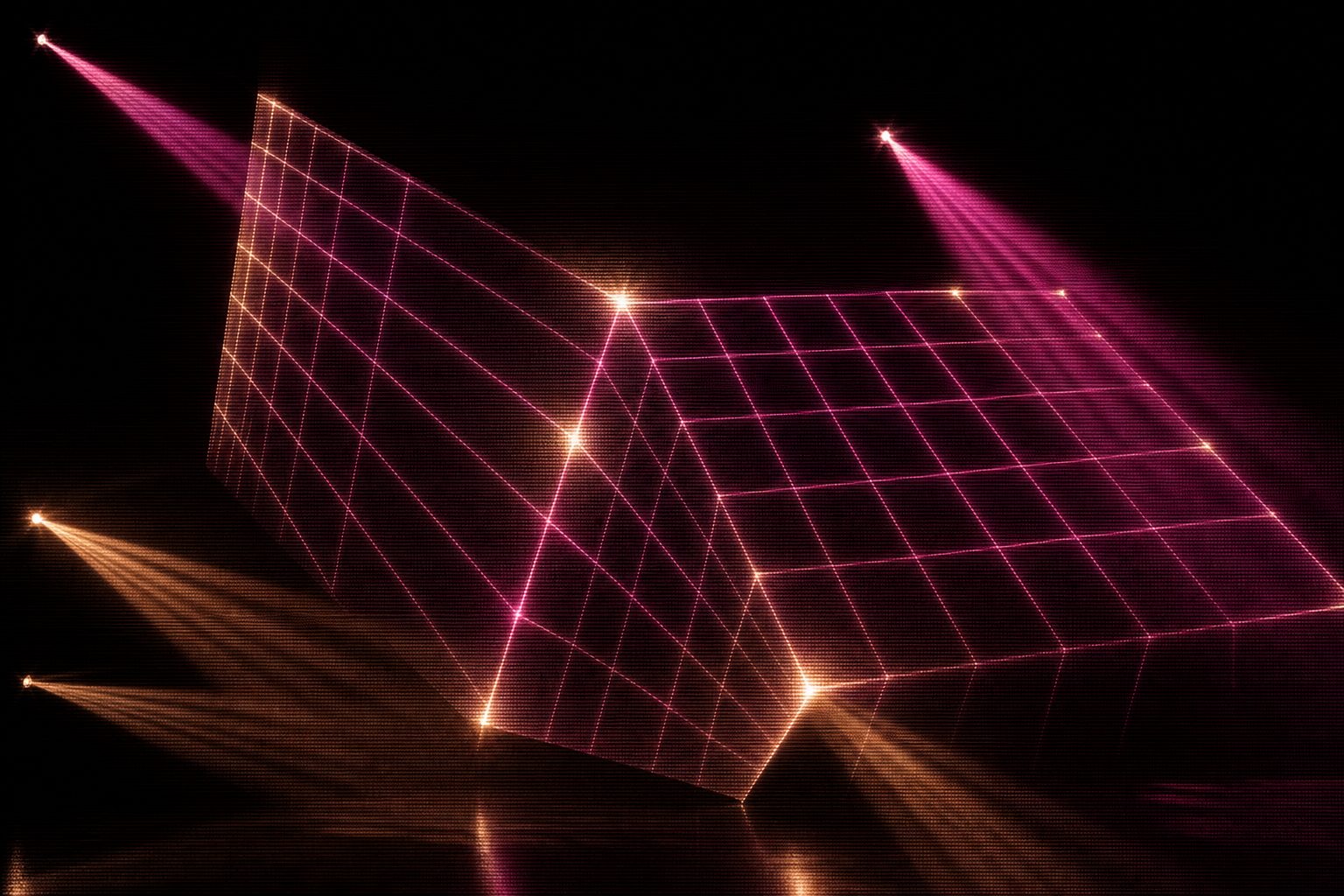
The calibration layer · redone at every load-in
Every playback tool has some mapping built in. A dedicated mapping tool exists because on a complicated surface, "some" runs out fast, and calibration is the part that gets redone every single day.
MadMapper is published by Garagecube; the program itself lives at madmapper.com, and what follows is what it is for rather than what it ships.
MadMapper sits at the end of the video chain, after everything else has decided what the picture is. Its only question is where the light physically lands, which sounds narrow until you watch a crew spend three hours on it before a show.
What a dedicated mapping stage buys
Playback tools include enough mapping for a flat surface at a sensible angle. The moment the surface has compound curvature, or several projectors have to cover it together, or the same setup has to be recalled and nudged in a new room tomorrow, that stops being enough.
A specialist tool separates the two concerns cleanly: the playback system decides what the picture is, and the mapping system decides where it goes. Each can then be worked on by a different person, which is the real operational benefit.
Warping, masking, blending
Warping pushes the image onto the geometry via a deformable mesh. Masking removes the parts that would otherwise spill onto structure, floor or audience. Blending ramps overlapping projectors so the seam disappears. Those three operations are almost the whole discipline of projection mapping in practice.
Calibration is a daily job
The thing that distinguishes touring from installation work is that alignment happens every day. A rig is built, and it is close to yesterday’s, and it is not the same.
A saved calibration recalled and adjusted takes a fraction of the time a rebuild does, so the value of the tool is partly in how well it stores and restores state under time pressure, an unglamorous requirement that decides what crews actually use.
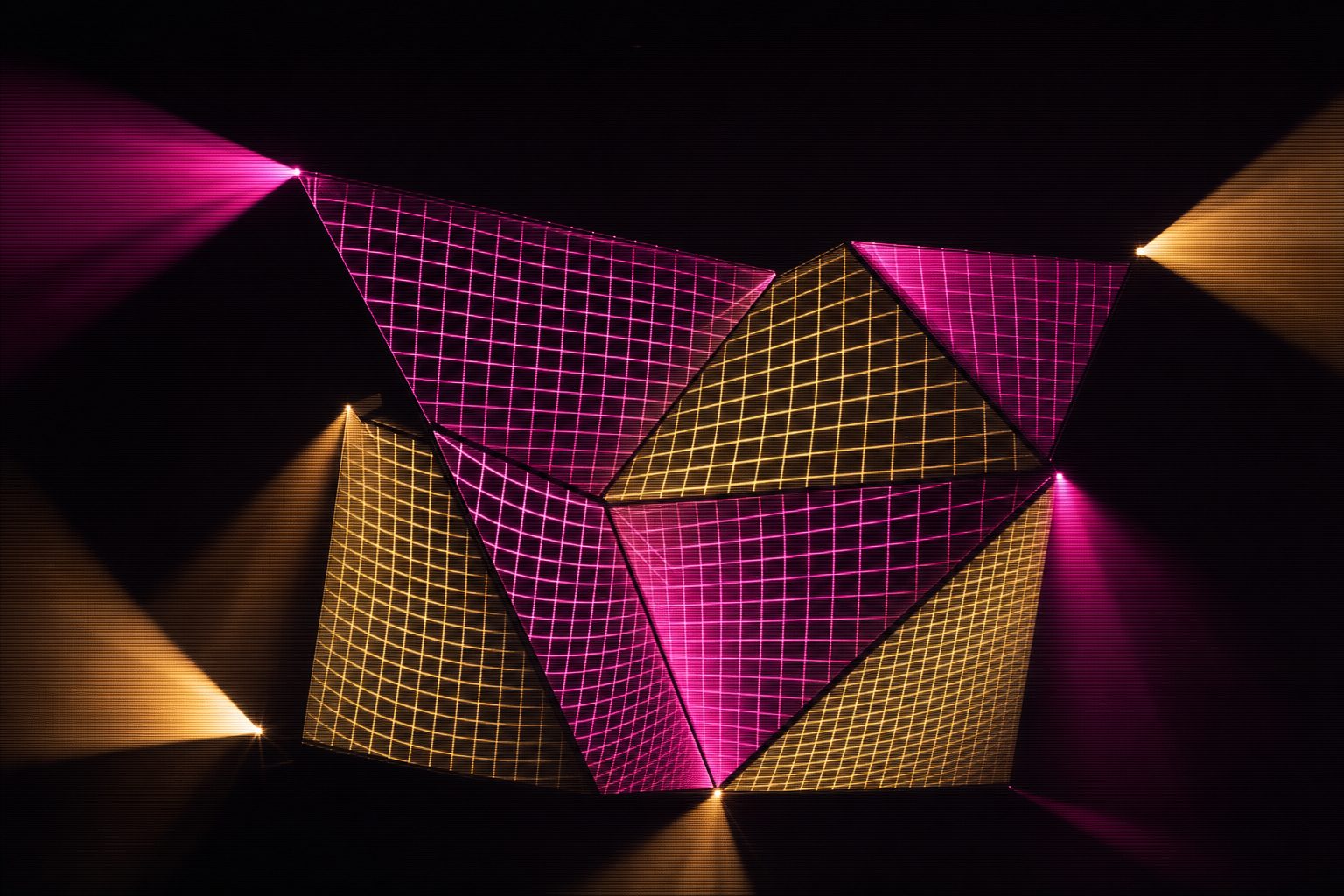
Every playback tool has some mapping built into its output, and on a complicated surface “some” runs out quickly. A dedicated stage exists because the hard part is not the first alignment but the twentieth, recovering the same map, quickly, in a different building.
What makes that possible is references built into the physical object: a hard edge, a corner, a marked point that the grid can be matched against. Without them the map is re-judged by eye every day, differently each time, by whoever is holding the laptop.
Prepared versus discovered
The largest variable in on-site time is whether the warp was calculated in advance from a previs model or is being found by eye. A prepared show verifies and adjusts. An unprepared show discovers its geometry with the clock running, which is how mapping earns its reputation for eating load-in.
Calibration is a daily job
The alignment achieved on the first day does not survive a truck. Panels settle, scenic pieces are re-flown a few millimetres out, a projector is nudged during focus. How long the daily recovery takes is not a property of the software; it is a design decision taken months earlier about whether the object has features worth matching to.
A show that budgets twenty minutes for this and a show that budgets two hours can look identical in a render. They are not the same show to tour.
What it needs and what it hands over
It needs a surface model, which comes from previs, and it hands a defined canvas to whoever authors content. The discipline it serves is documented under projection mapping; the arithmetic behind projector placement is in the throw-distance calculator.
In this archive the hardest cases are a closed cube that moves and a listed building of compound curves. Where it sits against the other programs is on the toolchain.
The other reason a separate stage earns its place is division of labour. Mapping is a different job from playing, done by a different person at a different time of day, and keeping it out of the playback tool means the operator's grid is not being edited by whoever is on a ladder with a laptop.
Questions
the things people ask about thisWhat does MadMapper do?
It is a dedicated mapping and warping stage: it takes incoming imagery and places it accurately onto real surfaces, handling mesh deformation, masking, edge blending and multi-projector alignment.
Why not just use the mapping in the playback software?
For simple surfaces you can, and many rigs do. A specialist tool earns its place when the geometry is complex, when several projectors must be blended, or when calibration has to be saved, recalled and adjusted quickly, which describes every touring show.
How long does calibration take on site?
Anywhere from minutes to hours depending on geometry and how much was prepared. The variable that matters most is whether the warp was calculated from a model in advance, a prepared show verifies, an unprepared one discovers.
Does it handle edge blending between projectors?
Yes, and that is a core reason to use it. Where two projectors overlap, their brightness must ramp through the overlap so the seam does not read. Doing this well across several machines is exactly the specialist job.
Can a mapping setup be reused night to night?
The saved calibration can be recalled, and on a repeatable rig it will be close. It will not be exact, because physical positions drift, so the daily routine is recall then adjust rather than rebuild.