THE PRODUCTIONS
Hollywood Bowl: designing inside a fixed architectural form
- YEAR
- 2016
- FOR
- Venue
- DISCIPLINE
- Lighting · Projection
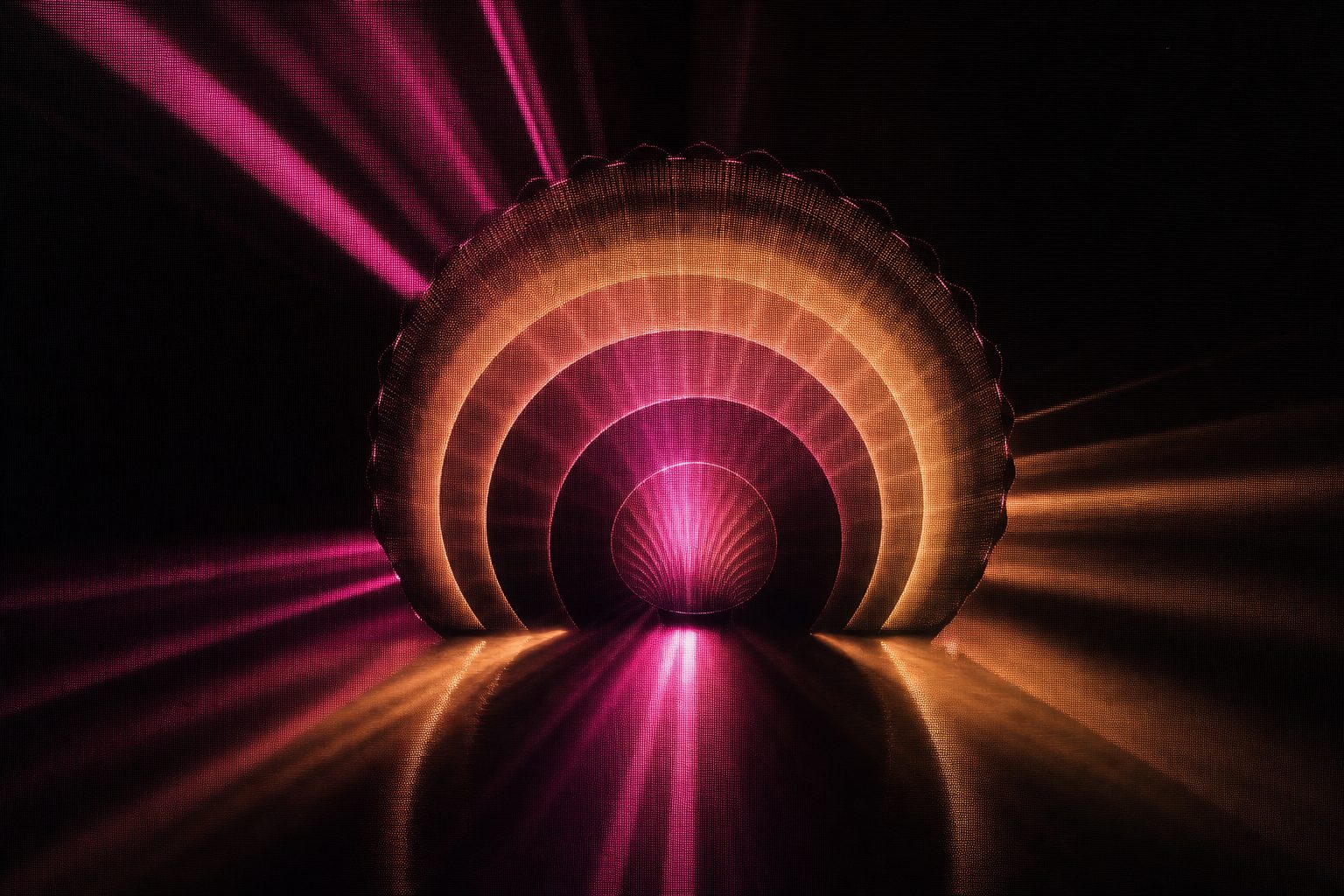
Most venues are boxes a production fills. The Hollywood Bowl is a shape with opinions, a fixed acoustic shell that reflects, frames and constrains everything put in front of it.
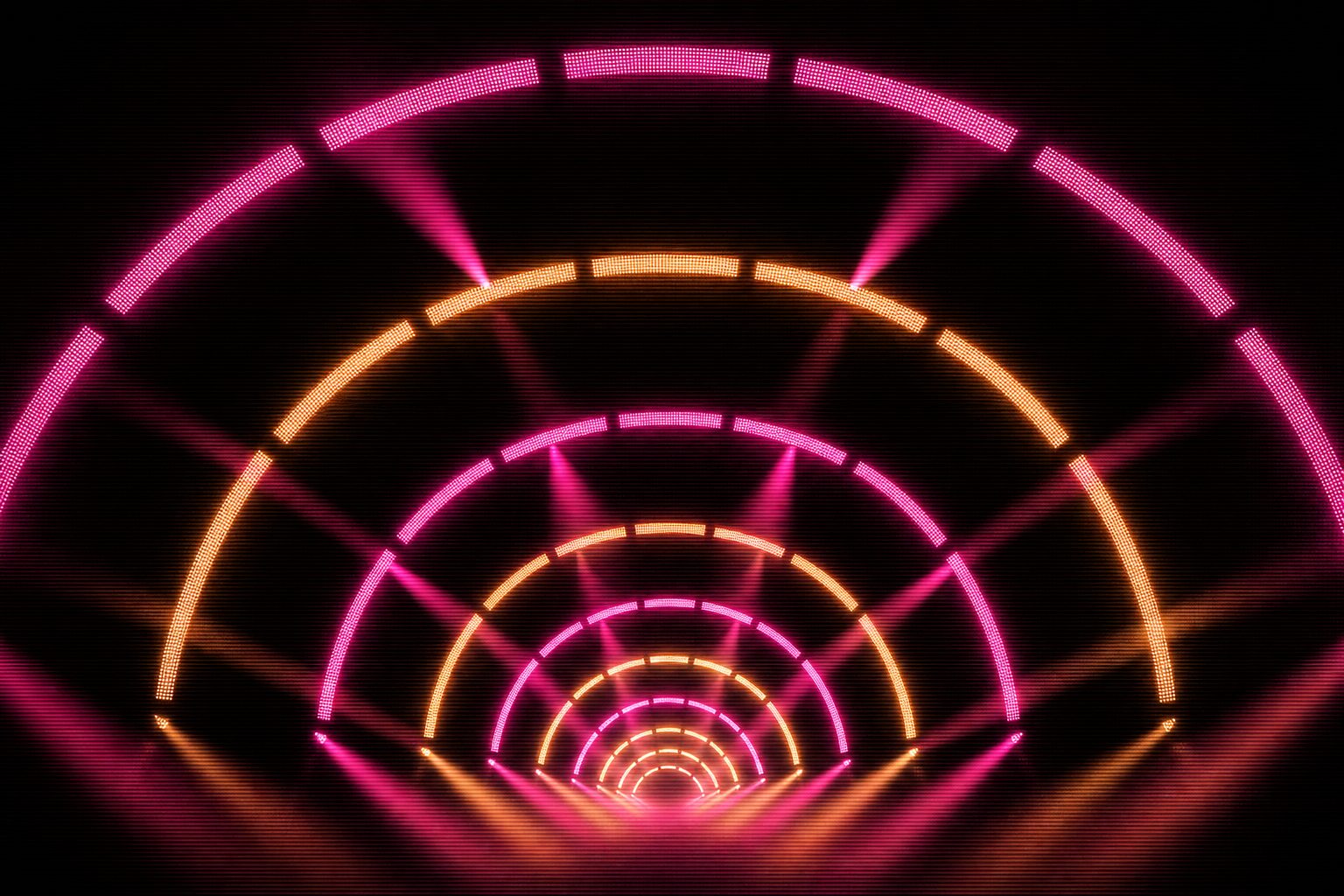
The Hollywood Bowl is a useful entry in this archive because it inverts the usual relationship. Touring design assumes a neutral container to be filled. Here the container has a strong form of its own, and the only two options are to work with it or to lose to it.
A surface the production did not design
The band shell is concentric, large and permanent. It appears in every wide view of the stage. Ignore it and the design reads as something small placed in front of something significant.
Designs that succeed here tend to extend the shell’s own geometry, echoing the arcs, using its bands as compositional divisions, running motion along its curvature. The fixed architecture does a large part of the composition before anyone lights anything.
Reflection, and the contrast it costs
The acoustic form was built to reflect sound and it happily reflects light too. Anything aimed near it bounces back into the space, raising ambient level across the whole stage.
The practical consequence is that beam angles are partly chosen to avoid accidentally washing the structure, and that projected content on any other surface loses contrast every time the shell is lit. It is a trade made repeatedly through a show rather than once.
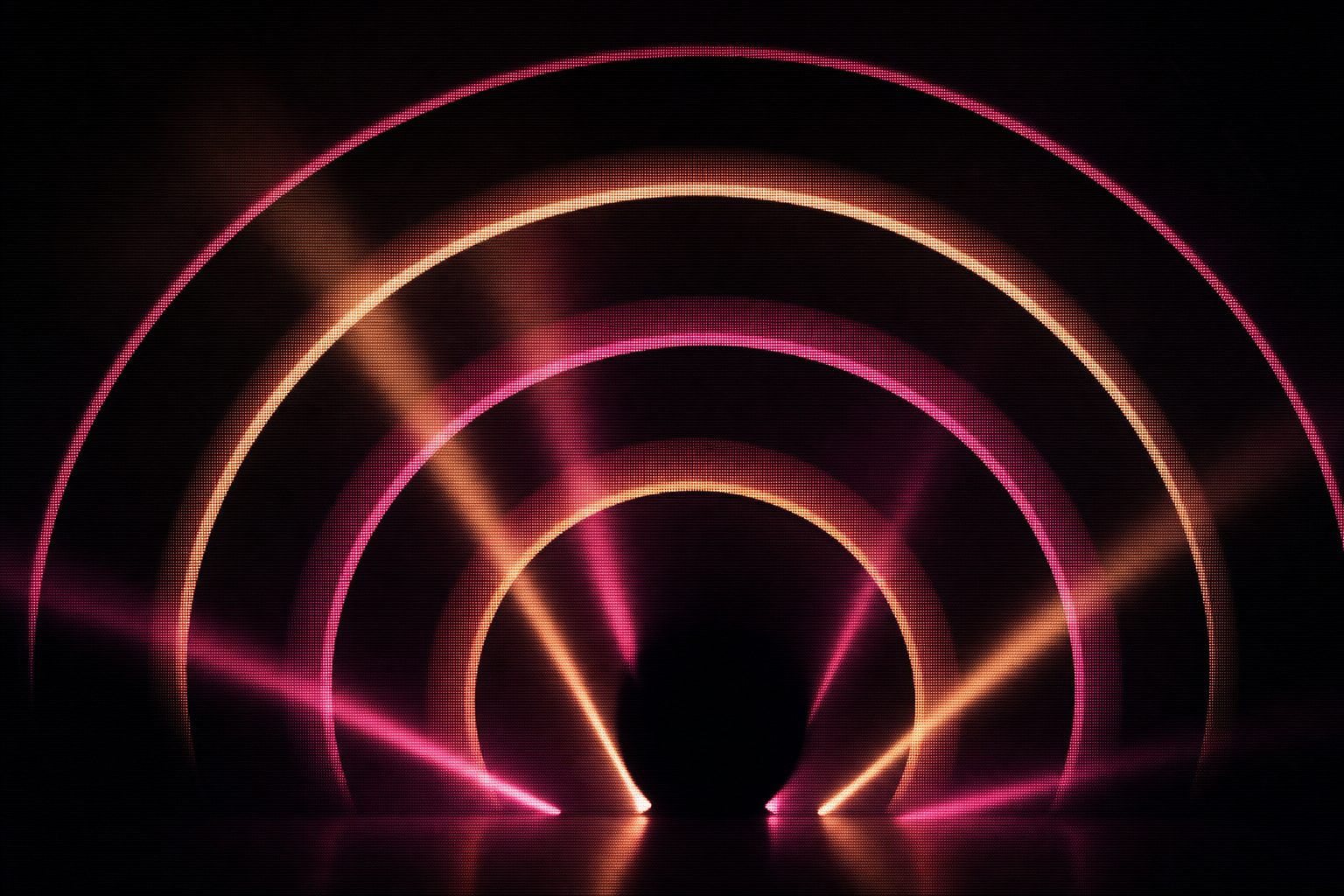
The shell is the venue's, not the show's. It frames every image placed in front of it, reflects a share of every beam aimed near it, and cannot be struck, re-hung or repainted for the evening.
The consequence that surprises people is contrast. A reflective surround raises the black level of everything projected in front of it, so a design that assumed a dark room arrives with less depth than it had in the model, and the correction is a design change, not a brightness setting.
Open air, raked seating
City sky never reaches true black, so effective contrast is lower than an arena all evening, and the design compensates with saturation and with beam work that reads against ambient rather than requiring darkness. Meanwhile the rake puts much of the audience looking downward, which rewards floor treatment and horizontal elements, the reverse of a flat arena floor, where both disappear.
The relevant technique pages are light programming for the beam work and projection mapping where the shell itself becomes the surface.
Where the technique went next
Inherited architecture recurs at a much larger scale in the architectural projection, where the building is the surface rather than the surround. The opposite case (no inherited surfaces at all) is the open festival field.
The contrast argument itself is documented under light programming, where lighting and video negotiate the same air, and under LED and volumetric, which sets out why a wall that makes its own light behaves differently in a bright surround from a projected image.
How this page is sourced
What is recorded: the design intent, the arrangement, the technical problem it set out to answer, and the consequences for touring. What is not recorded: fixture counts, equipment models, lumen figures or content specifications, which appear in trade coverage inconsistently and are not reproduced where a single source cannot be identified.
Press coverage from the period is gathered under the field in print, each item carrying its publisher and date so the weight of a claim stays visible. Terms such as volumetric and sightline mean something narrower in this trade than in general use, and are defined in the glossary. The standard behind the writing, published sources with gaps left as gaps, is set out on about this site.
The published record here is unusually good on the venue and unusually thin on the production: the shell's acoustic and visual behaviour is documented at length by the venue itself, while what any given show did about it is mostly recoverable from photographs. Where this page describes intent, it is describing what the design demonstrably had to solve rather than a stated plan.
Questions
the things people ask about thisWhat is a band shell and why does it matter visually?
A band shell is a curved acoustic form behind and above the stage, built to project sound outward. Visually it is a large, fixed, concentric surface that frames everything in front of it, so it is present in every wide shot whether the design engages with it or not.
Can you project onto the shell itself?
Sometimes, and it is frequently the most striking option available, because the fixed architecture gives the image a scale nothing brought in can match. It is constrained by throw distance, by ambient light in an open-air venue, and by what the venue permits.
How does the shell affect lighting?
It reflects. Light aimed near it bounces, lifting the ambient level and reducing contrast for everything else, which means beam angles get chosen partly to avoid unintentionally washing the entire structure.
Is an open-air amphitheatre harder than an arena?
Different rather than harder. There is no roof to rig from beyond what exists, ambient light from the surrounding city never goes away, and weather is a live factor. In exchange the sightlines are generous and the acoustic form gives the picture a frame most rooms cannot.
Does the audience layout change the design?
Yes. A raked amphitheatre puts a large part of the audience looking down at the stage rather than across it, so floor treatments and horizontal elements read far better than they do in a flat room, and anything relying on a low viewing angle disappears.