THE PRODUCTIONS
Coachella light shows, 2015 and 2016: a picture for a field after dark
- YEAR
- 2015-16
- FOR
- Festival
- DISCIPLINE
- Lighting · Video
A festival field is not a room. There are no walls to bounce off, no roof to hang from beyond the temporary one, and the picture has to survive being loaded in and out between two other acts.
The Coachella light shows of 2015 and 2016 are useful to document not as spectacle but as a constraint study. Everything that makes an indoor touring design work (controlled darkness, surfaces at known distances, a rig hung where the designer wanted it) is absent in a desert field.
Why the beam becomes the structure
Indoors, a designer has walls, a ceiling, and a room that holds light. Outdoors there is a stage and then there is sky, and the sky absorbs everything.
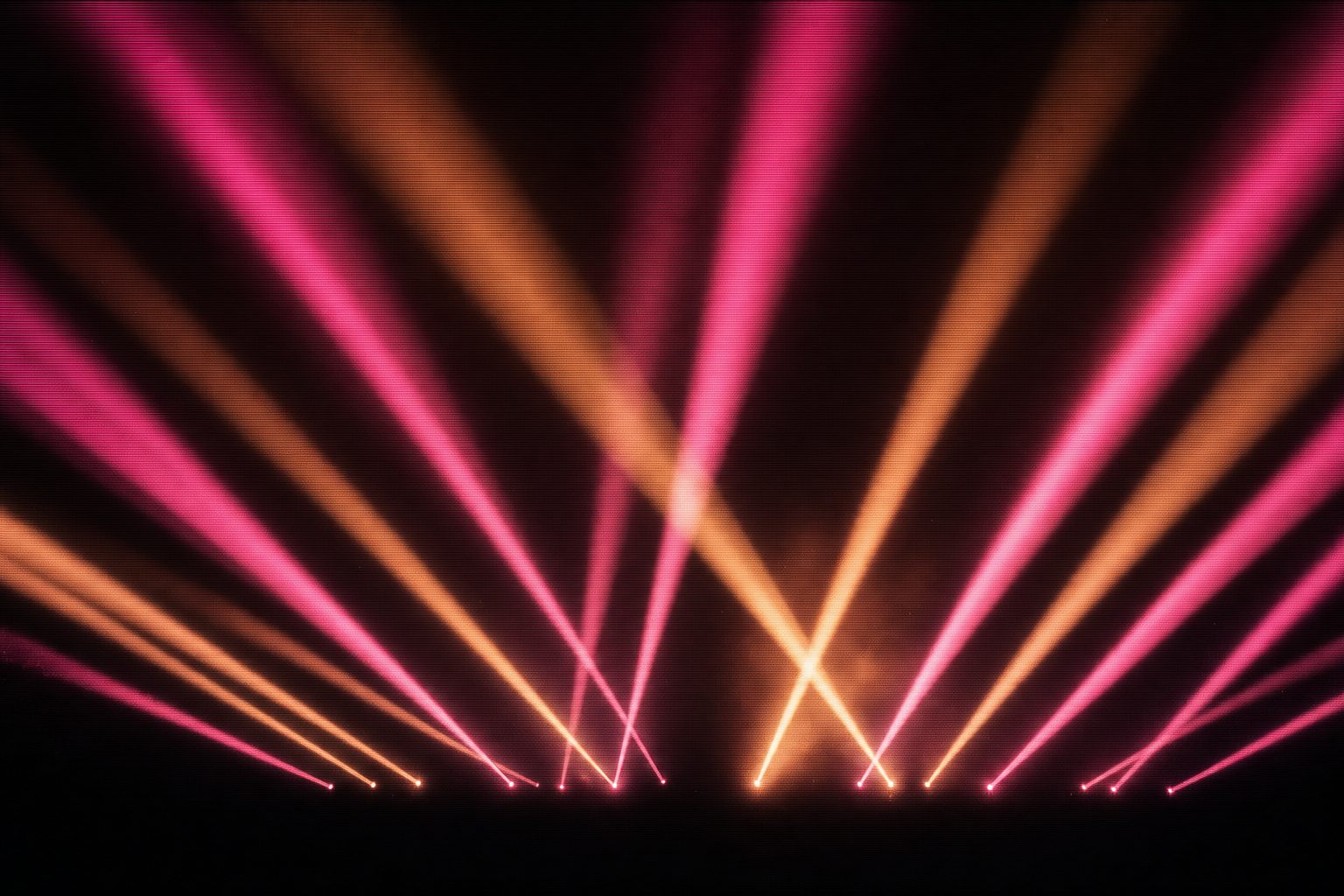
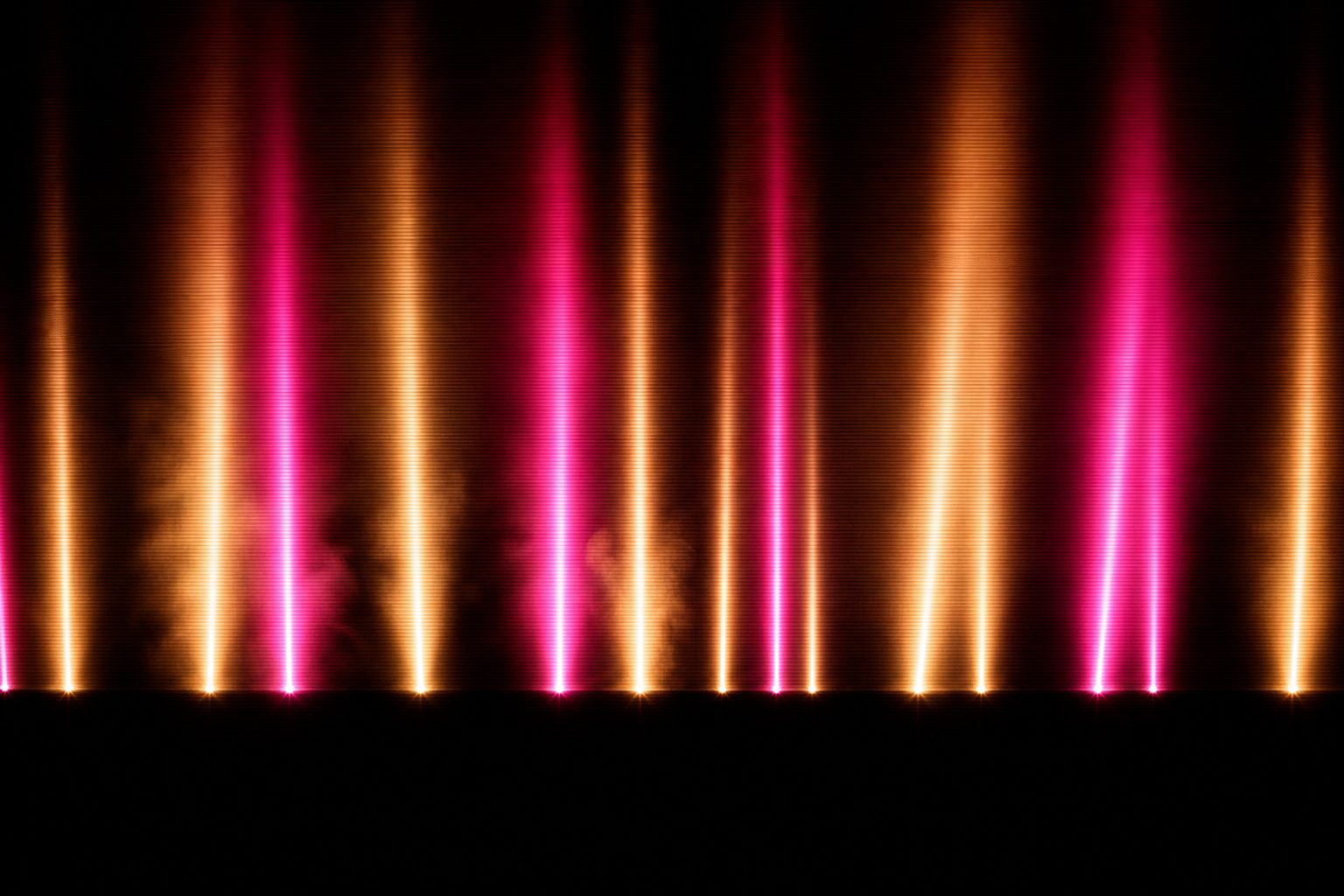
What survives is light that is visible in itself. A beam through haze or dust is an object; the audience sees the shaft, not what it lands on. This is why the open air visual language is built from beams, columns and fans rather than from wash and texture, the vocabulary is chosen by the physics, and everyone outdoors converges on it.
The changeover problem
A festival slot is short and the changeover is shorter. Whatever the design is, it has to be deployable in the gap between two other acts and struck just as fast.
In practice this means most of the rig is house structure that stays all weekend, and the show layer on top is small, fast and standardised. Designs that require significant build do not get built; designs that reconfigure existing structure do. It is a severe constraint and it produces a recognisable kind of thinking.
Take away the walls and the ceiling and most of a designer's vocabulary goes with them. There is nothing to project onto, nothing to bounce off, and no way to control the ambient level until the sun has finished setting.
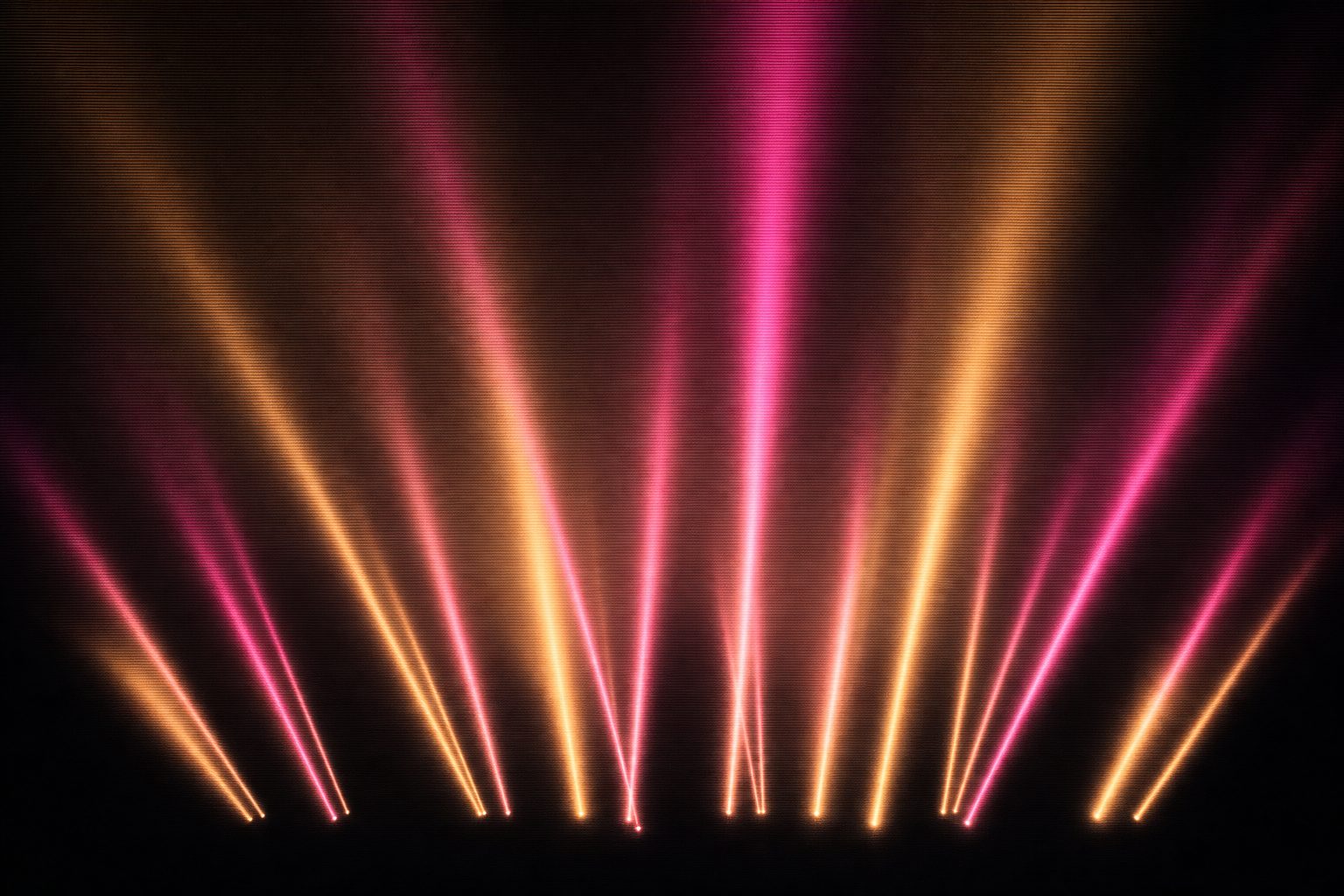
What remains is the beam itself as a built object, volumes of light with edges, arranged in the air rather than on a surface. That is a different craft from screen work, and it is the reason festival design and arena design produce such different-looking shows from the same departments.
Dust as permanent haze
Indoor productions manufacture haze and argue about how much. A desert site supplies it continuously and without a control channel.
This flatters beam work — everything reads, and complicates projection, because ambient particulate lifts the black level of any projected surface. It is one more reason the outdoor picture leans on the LED wall and on lighting rather than on mapped projection.
Where the technique went next
The opposite constraint — a fixed surface the production did not design and cannot remove, is the band shell, and the fully controlled case is the arena runs, where the room is dark and the picture is carried by the wall.
Beam work as a discipline is documented under light programming, including palettes and the haze negotiation that outdoor work makes moot. Why an LED wall rather than projection is the usual answer in daylight is under LED and volumetric.
How this page is sourced
What is recorded: the design intent, the arrangement, the technical problem it set out to answer, and the consequences for touring. What is not recorded: fixture counts, equipment models, lumen figures or content specifications, which appear in trade coverage inconsistently and are not reproduced where a single source cannot be identified.
Contemporaneous coverage of the run is collected under the field in print, listed with publisher and date so a reader can weigh each item directly. The working vocabulary the page leans on, volumetric and layer and haze among it, is defined once in the glossary rather than re-explained here. How this site is written, and what it does when two accounts of the same show disagree, is set out on about this site.
Questions
the things people ask about thisWhat changes when a show moves outdoors?
Almost every assumption. There are no surfaces to project onto beyond what the production brings, no walls to contain light, and the sky is an infinite black backdrop that swallows anything not bright enough. Festival design therefore leans on beam work and on the LED wall, because both make their own light.
Why does beam work dominate outdoor design?
Because a visible beam in haze is one of very few things that reads at scale in the open air. Wash light disperses with nothing to land on; projection needs darkness and a surface. A shaft of light standing in the air is legible from the back of a field, which is why the visual language of festival main stages looks the way it does.
How much time does a festival slot allow?
Very little, and it is the governing constraint. A changeover measured in minutes between acts means the rig must be mostly pre-existing house structure with a small, fast-deploying show layer on top, which shapes the design far more than any aesthetic preference.
Does the desert environment itself matter?
Considerably. Dust behaves like permanent haze, which flatters beam work; large temperature swings affect equipment; and wind loading limits what can be flown at height. Designs for a desert site account for all three.
Is a festival show the same show as the tour?
Rarely. It is usually a reduced version built from the same content, adapted to house structure and a shorter set. The parts that survive the reduction are the ones that did not depend on the touring rig’s specific geometry.