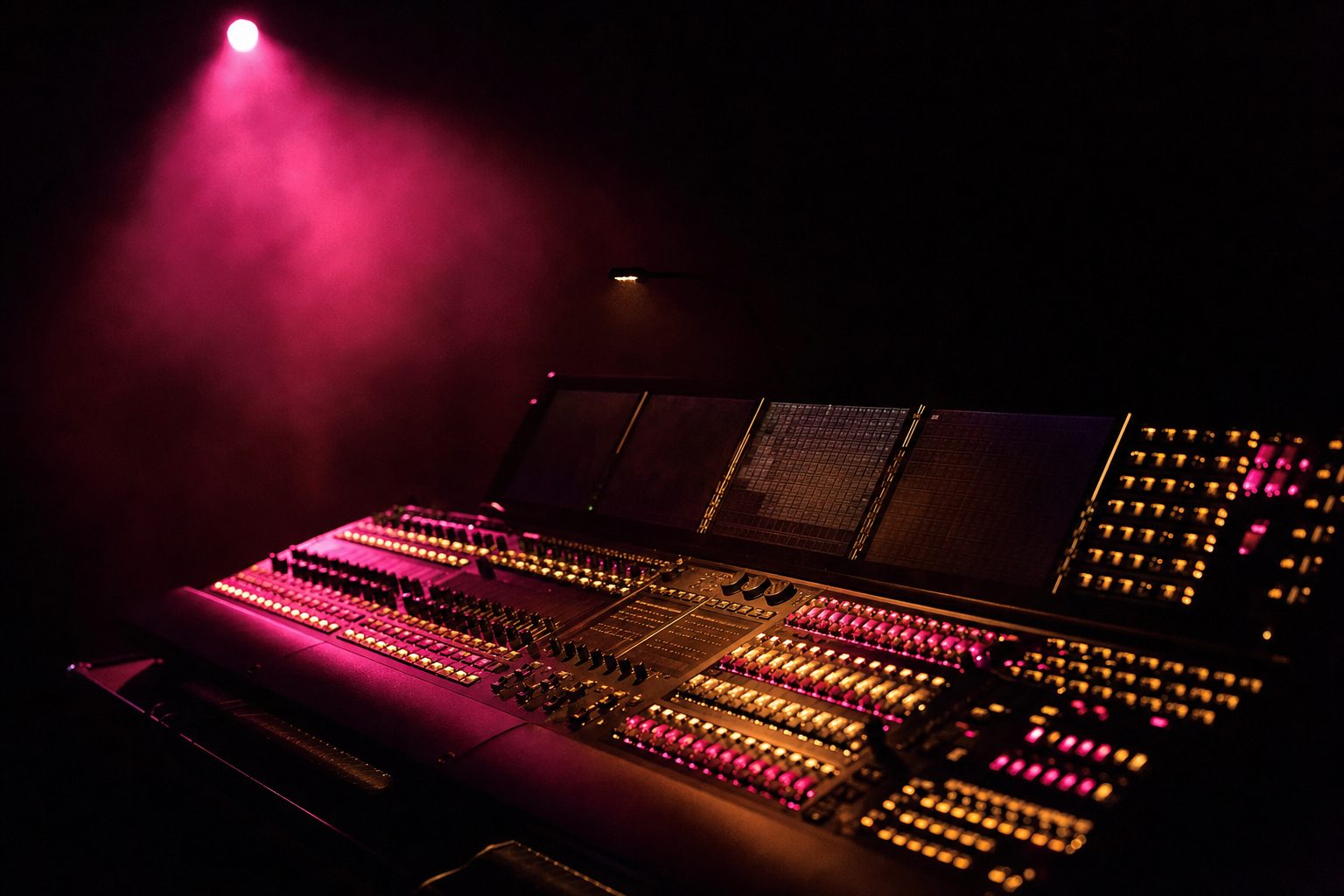
CH 07 · THE CRAFT
Light programming: fixtures, the cue stack and running to timecode
- DISCIPLINELighting
- SHARESThe air
- SYNCS VIATimecode
Lighting and video are two departments pointing at the same air. Light programming is what decides, cue by cue, which of them owns the moment, and the argument is more productive when it happens early.
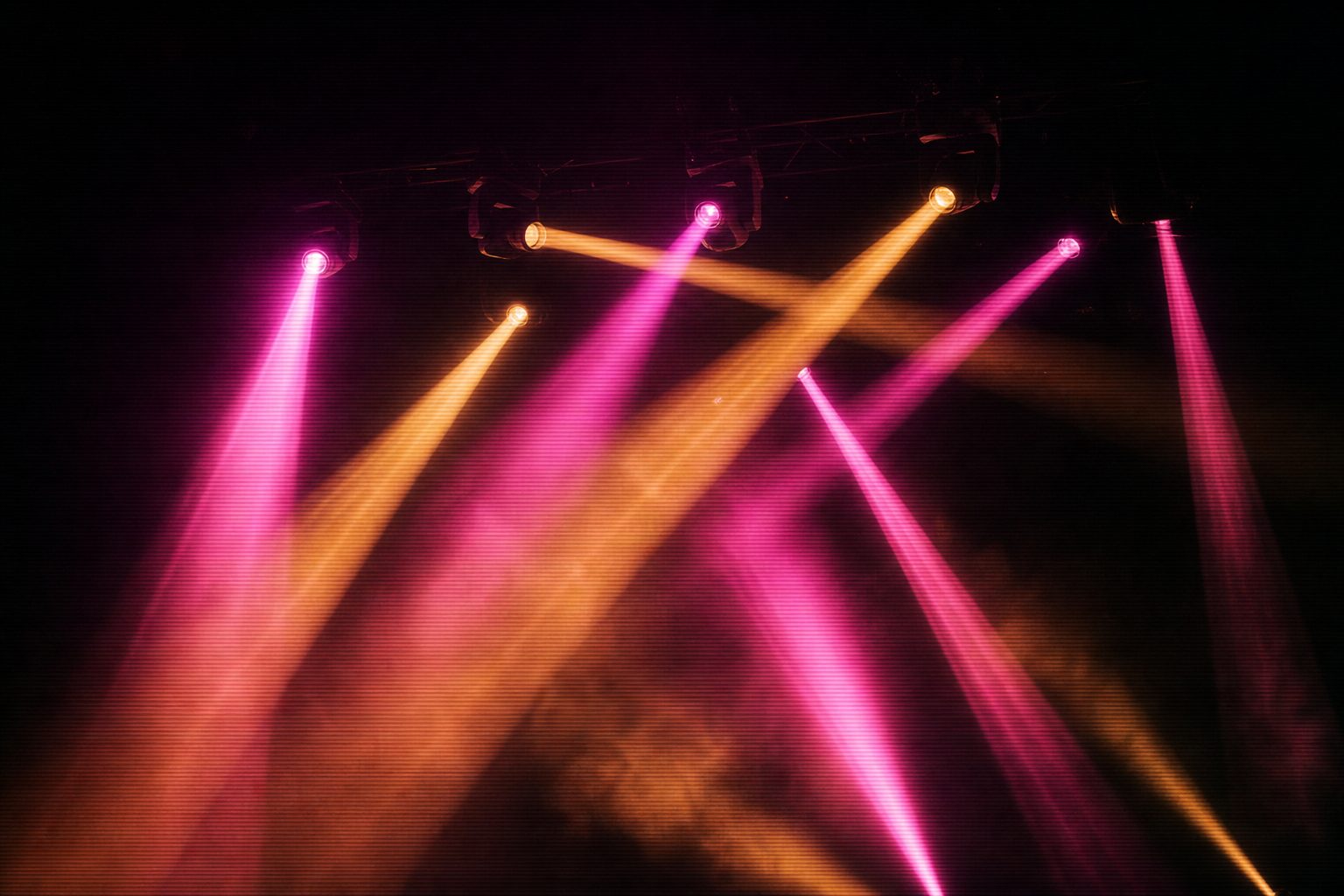
Light programming is the discipline that shares its medium with the video department. Both are putting light into the same volume of air, and neither can do its job without knowing what the other intends. Every show negotiates this, and shows that negotiate it late do so under pressure.
Fixtures, and what they are actually for
A modern rig contains fixtures with genuinely different jobs: wash light for coverage, beam fixtures for visible shafts in haze, profiles for shaped light on people and scenic, and strobes for impact. On a show with a large picture, a substantial part of the rig exists to make the air visible rather than to illuminate anything.
This is the first place lighting and video collide. Haze is what makes a beam readable, and haze is also what lifts the black level of every projected surface in the room. The right amount is a compromise, and it is settled by looking, together, in the actual venue.
Palettes: the reason a rig can tour
A cue that stores absolute values is a cue that breaks the moment a fixture moves. Since every venue forces something to move, a show built that way would be re-programmed nightly.
Palettes solve this by indirection. Cues reference named positions, colours and beam states rather than numbers. When the venue makes a fixture hang two metres left, the position palette is updated once and every cue that used it follows. It is the same discipline as a design token, applied to a lighting rig, and it is the difference between a tourable show and a one-off.
The cue stack and timecode
The cue stack is the show in order. Each entry holds a state and the times over which the rig moves into it, and the operator advances through the list, or does not, because the clock does it instead.
On a timecoded show, one master clock is distributed to the lighting desk, the media server and frequently the band’s playback. Each department runs its own show against that clock. Nobody controls anybody, and everything lands on the same frame. It is a durable arrangement precisely because it does not require the two departments to agree on anything except the time.
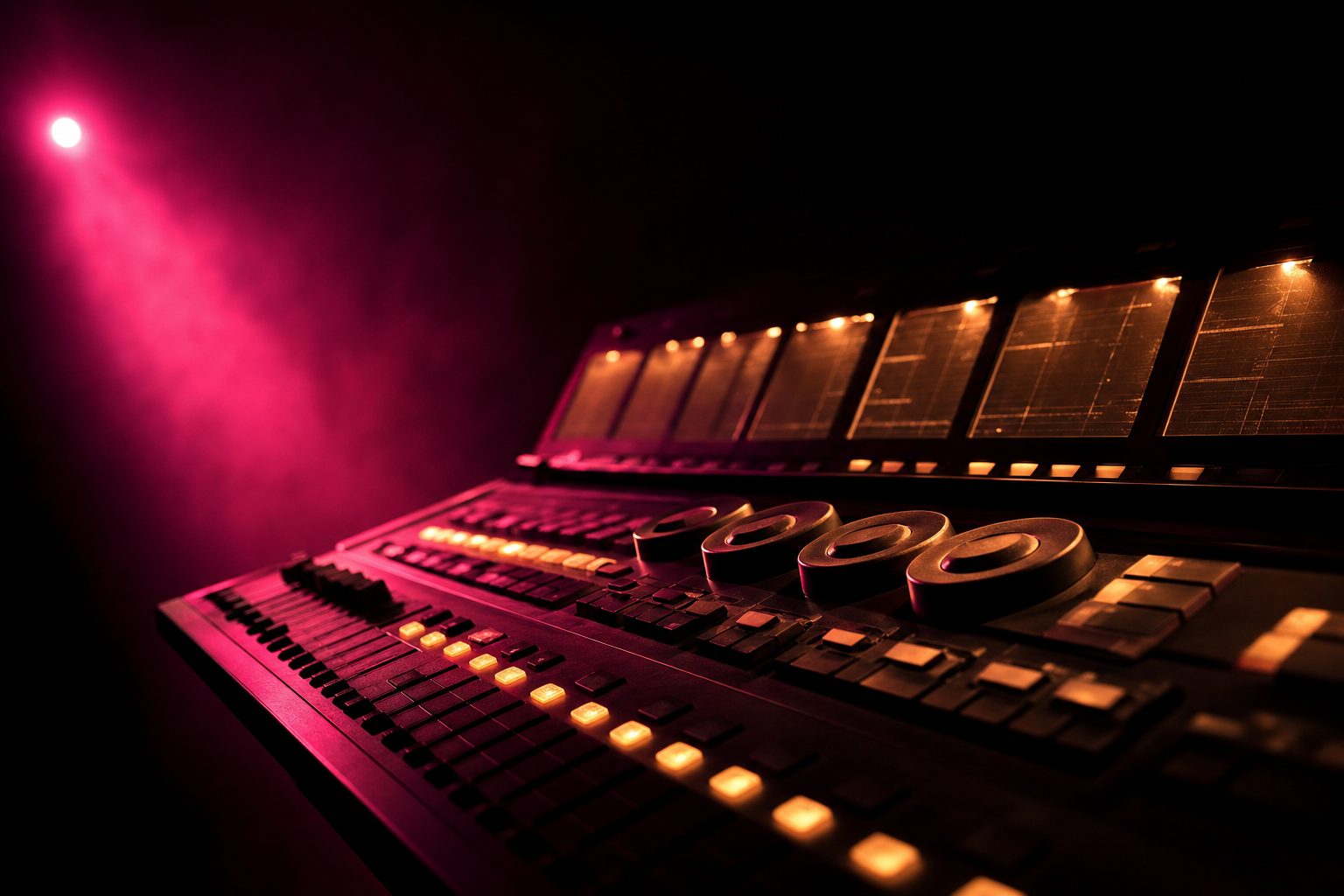
Both this desk and the media server can drive pixels, and both departments have a defensible claim on any given moment. The arrangement that causes least trouble is an explicit written split agreed during previs, not because either side is right, but because the alternative is discovering the disagreement during load-in with the clock running.
The other shared resource is haze. It is what makes a beam visible and it is also what lifts the black level of every projected surface in the building, so lighting wants more of it and video wants less. There is no correct number, only one that has been agreed by standing in the room.
Drawing the boundary
The persistent structural question is where the desk stops and the server starts. Both can drive pixels; both can be triggered by the other; both departments have an opinion.
The arrangement that causes least trouble is an explicit written split (the desk owns fixtures, the server owns surfaces, the desk may trigger server states) agreed during previs rather than during load-in. Where the picture is being run live rather than played to clock, this boundary matters even more, because the operator is making decisions in real time that the lighting cue stack cannot see.
Palettes are what let a rig tour
A cue stack written against specific fixtures in a specific position stops working the moment the rig changes shape, which on a routing is every few days. A stack written against palettes (named positions, colours and beam states that each venue's rig resolves locally) survives, because the show references intent rather than hardware.
This is the difference between a design that tours and one that gets rebuilt nightly, and it is decided at programming time rather than on the road.
Where the boundary sits
Upstream, the rig is limited by what the venue will carry and positioned against the model from previs. Alongside, it competes for the same air with an LED wall that makes its own light, and with projection that depends on the room staying dark. Downstream, the operator is working to the same clock.
In this archive the argument is most visible in an open festival field, where beam work carries the design because there are no surfaces, and in a fixed band shell, where every beam is reflected back by a surface the production did not design.
Questions
the things people ask about thisWhat is a cue stack?
A cue stack is the ordered list of lighting states for the show, each with its own fade times and triggers. The operator advances through it, or timecode advances it automatically. It is the show’s script as far as the lighting department is concerned.
What are palettes and why do they matter on tour?
Palettes are named, reusable references (this colour, this position, this beam shape) that cues point to instead of storing absolute values. Change the palette and every cue using it updates. On tour this is what makes a rig portable: when a venue forces a fixture to move, you repoint the position palette rather than editing four hundred cues.
How does timecode keep lighting and video together?
Both departments listen to the same clock, usually SMPTE, distributed from a single master. The lighting cue stack and the media server each hold their own show, and the shared timecode guarantees frame-accurate alignment without either controlling the other.
Where does the lighting desk end and the media server begin?
Wherever the production decides, and it should be decided in writing. A common split gives the desk the fixtures and the server the pixels, with the desk able to trigger server states. Trouble comes when both departments believe they own the same moment, which is a scheduling problem long before it is a technical one.
Can lighting be pre-programmed like video?
Yes, against a previs model, and on well-run productions most of the cue stack arrives already built. What cannot be pre-programmed is how the rig actually reads in the room (beam density in real haze, how a colour looks against the real LED wall) and that is what the on-site sessions are for.