CH 04 · THE CRAFT
Previs and 3D: building the virtual rig and pre-programming the show
- DISCIPLINEDesign
- BUYSParallel work
- FAILS LATENever — that is the point
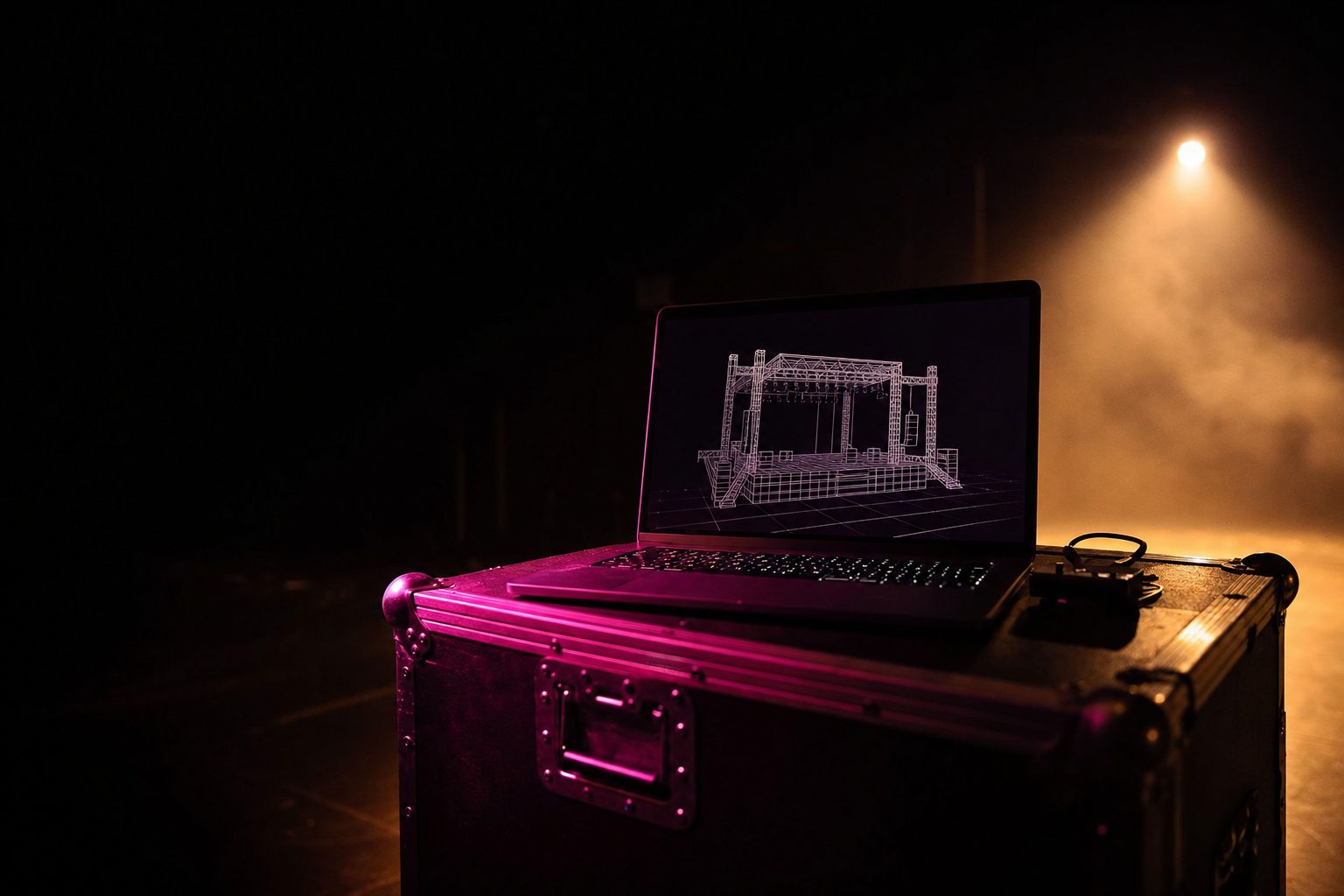
Previs is the practice of building the show in a computer before the truss goes up. Its whole economic argument is one sentence: a cue you find in the model costs nothing, and the same cue found in the room costs a day of everybody.
Previs is the cheapest hour on any production, and it is the one most often cut. The argument for it is not aesthetic. It is that every other discipline on this list is blocked, waiting for geometry, and previs is the only thing that can produce geometry before the geometry physically exists.
Build a 3D model of the stage, place the real fixtures and projectors in it at their real positions, load the actual content, and you have a virtual rig that six people can work against simultaneously, two months before the first truss arrives.
Sightlines: the argument previs settles
Every show has the same recurring dispute. The design looks superb from the middle of the room and from nowhere else. Someone in the side seats sees the back of a scenic piece; someone in the front row sees a projector; someone in the balcony sees the top of the wall stop short.
Sightlines in a model are a camera placed at a seat. That is the whole technique, and it is decisive, because the resulting picture is not an opinion. Productions that previs sightlines properly tend to have fewer late structural changes, because the changes happened while they were still free.
Pre-programming against a virtual rig
Once the model is accurate, the show can be built inside it. Content timing, layer states, warps, transitions, all of it can be pre-programmed and played back in the virtual rig, and what arrives at the venue is a show that already runs.
The limit is honest and worth stating: a model does not know what the room feels like. Haze density, the actual brightness of the wall against the actual lighting, how a colour reads at the back; these are discovered in the room and nowhere else. Previs does not remove that. It clears the schedule so there is time for it.
Modelling only what is load-bearing
A common failure is uniform detail. Someone models the set dressing to the same tolerance as the projector positions, and the model takes three times as long to produce for no additional decision.
The useful discipline is to ask, per element, which decision depends on it. Projector position: a warp is calculated from it, so it must be right. Truss height: sightlines depend on it, so it must be right. The texture of a scenic flat: nothing depends on it. Model accordingly.
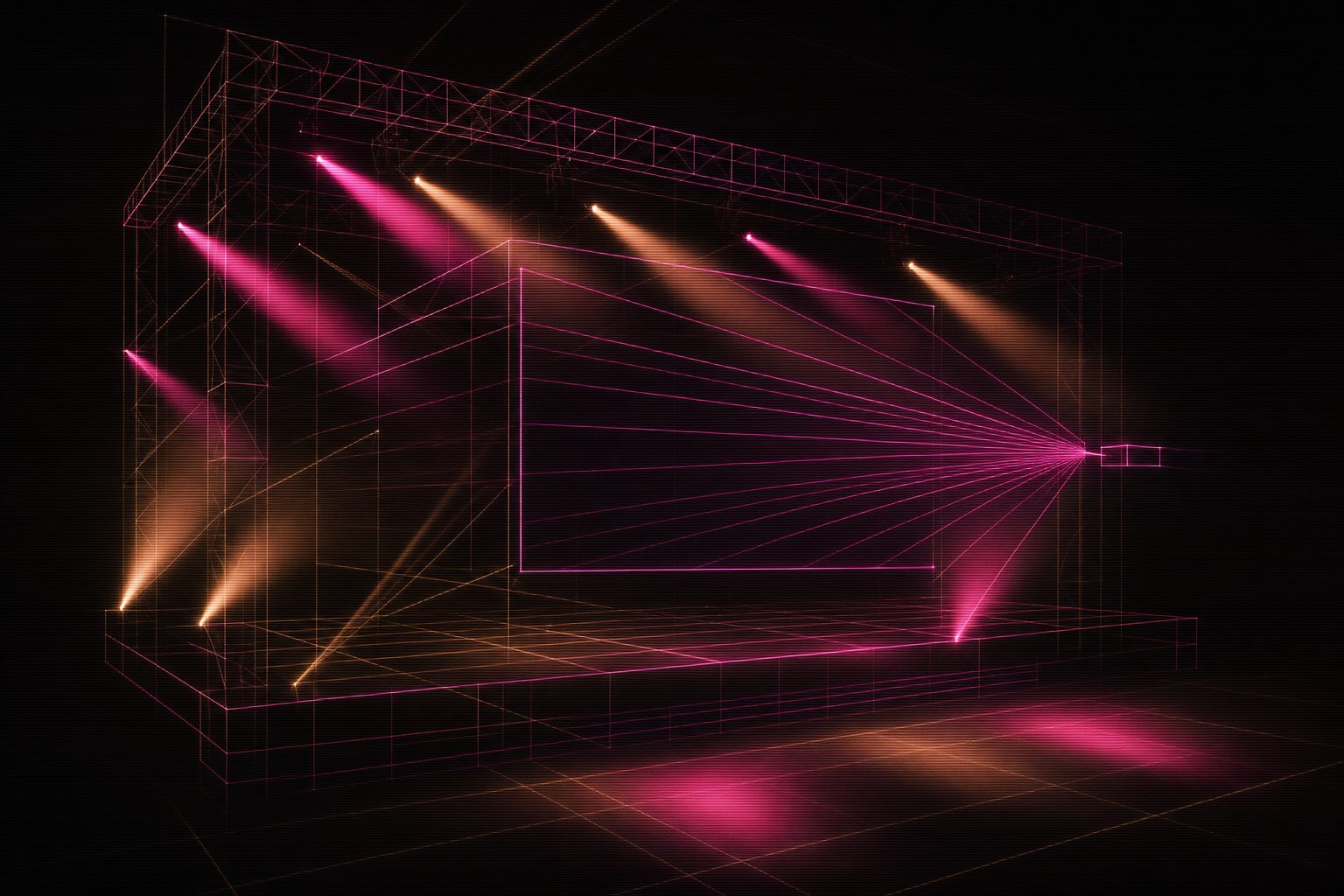
What makes a model useful is not how much of it exists but how much of it is true. A frustum drawn from a measured projector position tells you something; the same cone drawn from a guessed one tells you something false with total confidence, which is worse than an empty model.
This is the argument for building the model against survey data rather than against the drawing package. Venues differ from their own plans, sometimes by enough to matter, and a warp calculated against a plan that is 400 mm out has to be redone on site by hand.
What it unblocks
Previs is the enabling discipline for the other five. It gives projection mapping its surface model, the LED spec its sightline evidence, content creation a canvas to draw for, and light programming a rig to pre-program against, all before the steel is in a room.
What a model cannot tell you
Three things are discovered in the room and nowhere else: how dense the haze actually is, how the wall's brightness reads against the actual lighting state, and whether a colour survives at the back of the house. None of them are modelling failures. They are properties of a physical room with air in it.
Stating the limit is what keeps previs credible. A department that claims the model settles everything gets its budget cut the first time the room disagrees with it; a department that says which arguments it settles (geometry, sightlines, timing) and which it does not tends to keep the hour it needs.
Who is waiting on this
Almost everyone. Mapping needs the surface model before a warp can be authored at all. Content needs the canvas dimensions before a frame can be drawn. Lighting needs fixture positions to pre-programme against, and the LED specification needs the physical envelope it has to fit inside.
The software involved is covered under the toolchain, and the throw-distance calculator resolves the single arithmetic question a model most often gets asked.
Questions
the things people ask about thisWhat is previs in live production?
Previs — previsualisation, is building a 3D model of the stage, the rig and the content, and running the show inside it before anything is built. It is used to test sightlines, to pre-program cues, and to give every other department geometry to work against while the physical version does not yet exist.
How accurate does a previs model need to be?
Accurate where it is load-bearing, rough everywhere else. Projector positions, surface geometry and sightlines have to be right to the centimetre because decisions are made from them. Set dressing does not. A model that is uniformly detailed has usually wasted effort on the parts nobody measures.
Can cues really be pre-programmed before the rig exists?
A great deal of them, yes. Content timing, layer states and transitions are all authorable against a virtual rig, and on well-run productions most of the show arrives at the venue already built. What cannot be pre-programmed is anything that depends on how the real room actually looks, and that is what the on-site time is for.
Does previs replace time in the room?
No, it changes what the room is for. Without previs, load-in time is spent discovering the show. With it, that time is spent verifying and refining a show that already exists. The total hours may not drop; the hours that happen under pressure do.
What does previs give the other departments?
Geometry, early. Projection mapping gets a surface model to calculate warps against, the LED specification gets sightline evidence, and content gets a canvas shape to author for. This is what lets six disciplines work in parallel instead of queueing behind each other.